
Where does Vedic meditation come from?
Getting to know the roots from where the fruits of your practice originate
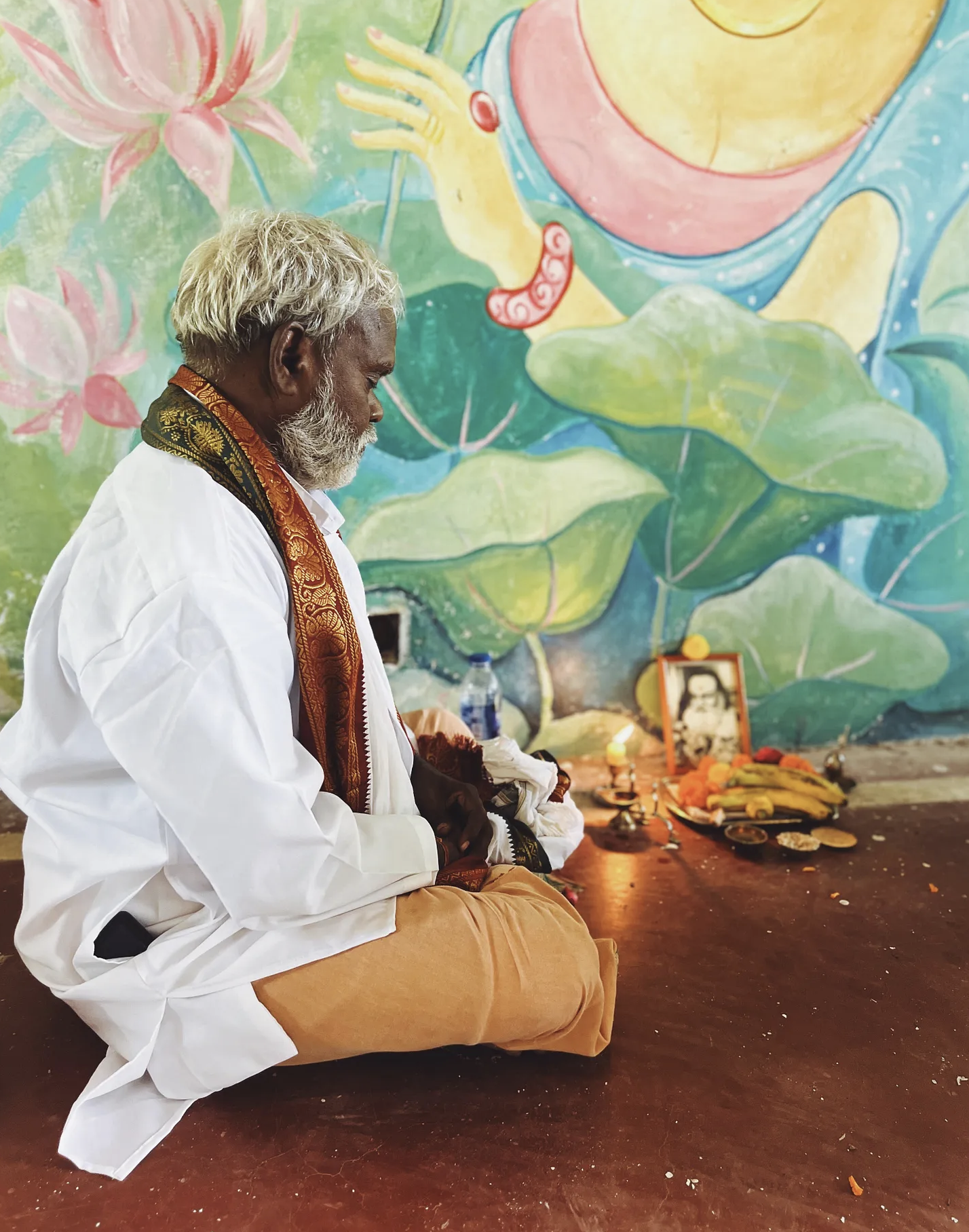
We have just wrapped up our Navarātrī Rounding and Yajña Retreat here in Rishikesh in the foothills of the Himalayas. 10 days, 48 rounds, 36 hours of yajña, and 18+ hours of knowledge over the auspicious 9 nights of Navarātrī. It was BIG! We laughed, cried, celebrated life, supported each other, and created space for deep letting go.
On the final day we gathered in circle to share our gratitude and realisations. A theme that emerged was deep gratitude for this incredible land we call India, the beating heart of our Vedic traditional. Our hearts were overflowing with love and appreciation for the people, land, and experiences India has to offer. And the blessing that we are able to visit this incredible country that is so vastly different to life back home.
We spoke a lot about our Vedic lineage while on retreat, sharing many stories of the masters whom passed down this wisdom and knowledge for thousands of years that we right now are still benefiting from. That everything we have received through our practice was because of these great teachers. Through this story telling what emerged in the group was a deeper connection to our Śaṅkarācārya lineage that we are all part of. Tears of heart felt gratitude flowed with this deep sense of belonging and connection. Everyone on retreat already loved their practice, knew exactly why it was important, but for some it was the first time they felt truly connected to their meditation lineage, also known as our guru-paramparā.
Do you need to know where your practice comes from?
The short answer is no. Vedic meditation is a simple mental technique that anyone can practice. It brings profound transformation into all people’s lives whether you are aware of the Vedic wisdom traditions or not, are religious or non-religious, or come from any background or history. The common thing we all have is a mind and as we say, ‘If you can think you can meditate.’
Meditation is like the fruit on the tree. Each of us who have learnt Vedic meditation have had the great fortune (or what we would call karma) of coming to this practice and being offered the fruit in a way that will satiate our desire. Maybe be came to meditation to feel less stressed, to be more present and calm, to find deeper purpose… the list goes on. Meditation meets all those needs - all you need to do is eat the fruit.
But where did that fruit come from? For those who tend to the tree (i.e. teachers and those who are curious about the provenance of things) they naturally find themselves drawn towards exploring the branches, trunk, and roots. This is something at Mahasoma we love doing as it helps us to keep giving fresh, juicy, nourishing fruit to our community. It’s not for everyone! And we want to be clear that it’s not a necessity to benefit from meditation. However, as we experienced in India what it can do is foster a deeper sense of appreciation. When we appreciate something we naturally give it our time and attention. We come to experience deeper belonging, understanding, and our place in the world. So, whether you cultivate the tree or simply enjoy eating the fruit of your practice, we thought to share a little more with you on the roots of Vedic meditation.
Our Vedic tradition.
‘Vedic’ is an English version of the Sanskrit word ‘Veda’ which means ‘to know’ and describes what we refer to as pure knowledge or wisdom. This knowledge is as old as time itself and forms the basis of our meditation practice. The Veda simply is. Formed around this knowledge of life came the ancient Vedic culture, which some historians say was the indigenous culture of our whole planet at one point in time. As the earth evolved and land masses shifted, civilizations have risen and fallen, and we now have boundaries for the different lands we call countries. Today we say the Vedic culture comes from the land of India or Bhārata. All the indigenous cultures of the world share the same basic principles and truths of life but the techniques to directly experience them are different.
Although the Veda has its roots in India, it is not Indian in the same way that the law of relativity that Einstein cognised is not German. This is universal knowledge; it is the indigenous wisdom of our collective humanity. It is apauruṣeyā, meaning author-less. Your ancestors would have practiced and upheld this knowledge in their own ways. The Vedic wisdom we have been transformed by through our daily practice of Vedic meditation comes to us from India because it is one of the only cultures in the world that can trace an unbroken lineage with full access to this deep wisdom.
The recent history of the technique.
Vedic meditation is a technique of transcendence and has been taught specifically for those who have active lives. In India the active phase of life is known as gṛhastha or being a householder. This is anyone engaged in family life/relationships, with a job, creative pursuits etc. This practice is so needed for householders as in a fast paced world where stress is the norm we are experiencing a disconnect from the deeper aspects of ourselves. Transcendence means ‘to go beyond’. Why is this necessary? In order to transform and create change we need to go beyond ideas and self-limiting beliefs that create habits and patterns for how we see ourselves and the world we live in.
The practice we do today was most recently cognised by a great Vedic master known as Maharishi Mahesh Yogi in the early 1960’s. Maharishi said that this wisdom came from his teacher, Swami Brahmananda Saraswati (who we refer to as Guru Deva). But we have to remember that the essence of transcending is eternal wisdom and has been woven into our rising and falling civilisations since the beginning of time.
Swami Brahmananda Saraswati was born in 1870 in Uttarpradesh, India, to a respected family. He left home at the age of 9, renouncing worldly life in search of a Guru. After 5 years he found his Guru and studied with him till his own self-realisation emerged. He then became a well-known and sought-after teacher (although hard to access) and was nominated to hold the prestigious position in India as Śaṅkarācārya of Jyotirmath - the northern seat of Vedic wisdom that had sat vacant for 150 years. Though he preferred a secluded life, Guru Deva accepted the position in 1941, about 6 months after Maharishi Mahesh Yogi became his student.
Maharishi was born in the Kṣatriya (warrior) caste and because of his status he was told he could not be a successor of Guru Deva. With devotion in his heart and in order to be closer to Guru Deva, Maharishi began to assist the housekeeper who worked in Guru Deva’s home. Maharishi was an intelligent, well versed man with multiple university degrees. It was his skills in English and the written word that enabled him to be of great service to Guru Deva. It was Maharishi who wrote Guru Deva’s personal replies and delivered an important letter to Mount Batten, the last viceroy of India charged with overseeing the transition of the British’s rule of India to her independence. From then on he became Guru Deva’s trusted assistant and translator.
Maharishi never received any formal teaching or lectures from Guru Deva. It was through careful observation and anticipation of what was needed by Guru Deva that a transference of knowledge occurred. This is what we call devotion. Maharishi said it took him 2 years to ‘adjust his thinking to that of Guru Deva’ and spent a total of 13 years in his presence. It was Maharishi that brought the technique we today call Vedic meditation (although it has had many names) to the whole world. He travelled extensively teaching and lecturing until he dropped his body in 2008. If you want to hear Maharishi speak on the first time he taught meditation in Kerala you can watch the video ‘The Thought Rameshwaram’. This journey he talks about is the impetus for our next Mahasoma South India Pilgrimage retreat with Laura Poole and Pandit Baskaran.
Gratitude to the roots, branches, and fruit!
We offer our gratitude to Guru Deva, Maharishi, and all the masters before them who have given us this timeless wisdom and our transcending technique of Vedic meditation. This is why before learning Vedic meditation you witness us performing a ceremony of gratitude called guru pūjā to the tradition of our masters (it’s also something we do personally everyday as teachers.) When we offer our gratitude we are not making an offering to the person but are honouring that which they have embodied and become; pure consciousness, love, unbounded potential, and pure creativity. That which resides in each and every one of us. In doing this we keep the roots well watered, the trunk and branches of our lineage strong, and the fruit of Vedic meditation as soothing medicine for the one who seeks the truth.
With love,
Kathleen x
Resources to explore.
Read our spiritual heritage by Lynn D. Napper and Vicky S. Napper to learn about the masters in our Vedic meditation tradition.
Listen to Maharishi Mahesh yogi speak about how Vedic meditation first came to be.
Experience Vedic India with us on retreat - Siva Sakti Sages & Siddhas - a South India pilgrimage with Laura Poole and Pandit Baskaran - 17 February - 3 March, 2025
